 Uniform manufacturer · Kerala
How to choose a uniform fabric that survives daily washing
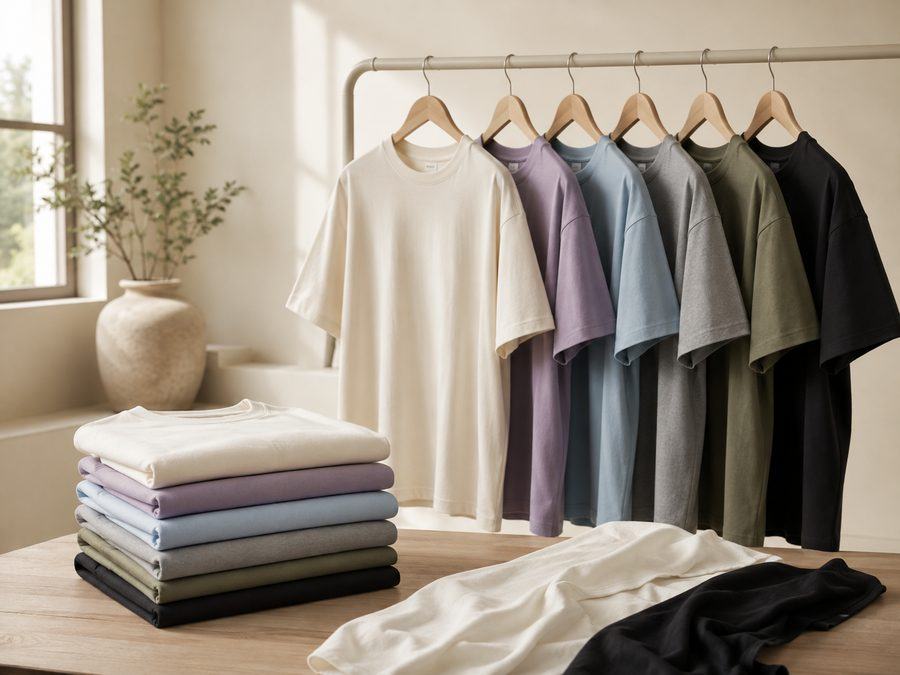
Almost every uniform complaint we hear is really a fabric decision made months earlier. Here is how to get that decision right the first time.
A uniform is not judged on the day it arrives. It is judged in month six, when it has been through roughly a hundred and fifty washes and is still expected to look like the company that issued it. That is a completely different test from how a swatch feels in your hand.
What actually goes wrong
Three things, almost always in this order. The colour shifts, usually first at the shoulders and collar where sunlight and sweat concentrate. The shape loosens, so a collar that stood up in week one now lies flat. And the surface pills, giving the garment that fuzzy, tired look even though the seams are perfectly sound.
None of these are stitching faults. They are fabric choices catching up with you.
Cotton feels best and ages fastest
Pure cotton is the most comfortable thing you can put on a person in Kerala, and we sell plenty of it. But it absorbs water, so it takes longer to dry, and it loses shape faster than any blend. For an office T-shirt worn twice a week, that is a fair trade. For a hotel that washes uniforms daily on a hot cycle, it is not.
The blends we recommend most
- Pique, 65/35 poly-cotton. The workhorse for corporate polos. The textured knit hides light creasing, the polyester holds the collar shape, and the cotton keeps it breathable. This is what we suggest when a client says the last batch went shapeless.
- Poplin, 60/40 poly-cotton. Crisp and light. Formal shirts, hospital wear, school uniforms — anywhere a garment has to look pressed rather than relaxed.
- Twill, 80/20 poly-cotton. Heavy and abrasion resistant. Coveralls, aprons, workshop wear. It takes a beating and keeps its colour.
Where technical fabric earns its price
For factory floors, food processing units and outdoor work, comfort alone is not the brief. There we move to fabrics with super wicking to pull sweat off the skin, anti-microbial treatment to control odour-causing bacteria, UV protection for anyone working in open yards, and high durability for industrial laundering. They cost more per piece. They also last long enough that the cost per wear is usually lower.
The question to ask before you order
Not "which fabric is best" — there is no answer to that. Ask instead: how often will this be washed, at what temperature, and what is the person doing while wearing it? Tell us those three things and we can narrow six options down to one, usually in the first message.
A T-shirt for an air-conditioned office and a T-shirt for a factory floor are the same shape and an entirely different fabric.
We stitch one sample in your chosen fabric and colour within about seven days, before any bulk production starts. Wash it a few times. If it does not behave the way you expected, we change the fabric and nothing has been lost but a week.
Planning an order and want a second opinion before you commit? Message us on WhatsApp or email knitwearcapital@gmail.com. Our minimum is 10 pieces for uniforms and jerseys, so there is no need to wait until you have a large order.