 Uniform manufacturer · Kerala
How to collect uniform sizes for your staff without chaos
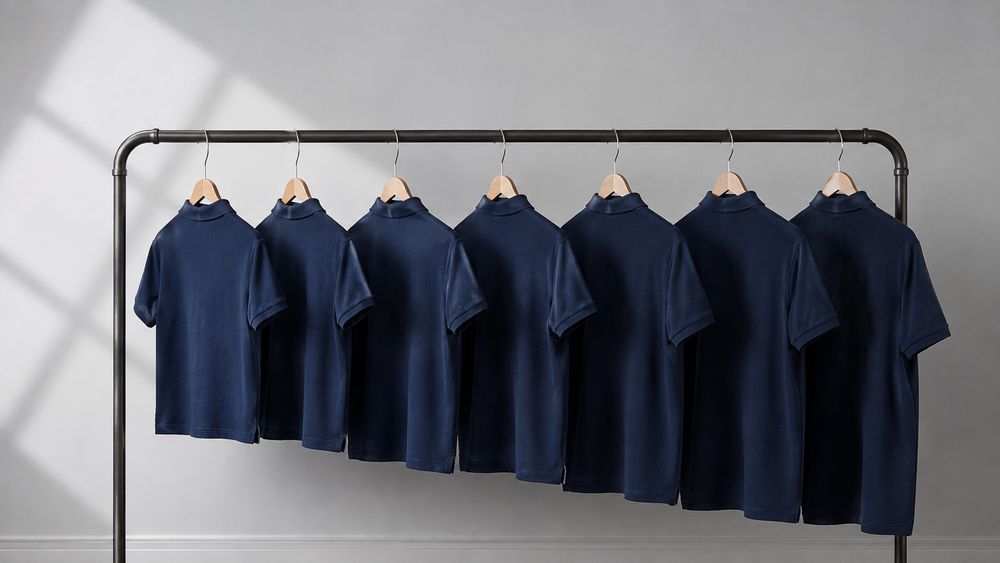
More uniform orders go wrong at this step than at any other, and it is entirely avoidable.
The usual approach is a message to the team asking everyone to reply with their size. Twelve people say L, three say "medium I think", two do not reply, and the order goes in. Six weeks later a third of the staff have a garment that does not fit, and somebody has to explain the reorder.
Why asking for a size does not work
Because "L" is not a measurement. It means different things in different brands, and most people report the size of whichever shirt they last bought rather than the size that actually fits them. Someone who wears a loose L in a retail brand may need XL in a tailored uniform shirt, and they will not know that.
There is also a social problem. People under-report, particularly at the larger end of the range, and a garment that does not fit rarely gets mentioned — it just does not get worn.
The method that works: a size set
Ask your supplier for a size set — one physical garment in each size, in the actual fabric and cut you have chosen. Staff try them on, and you record the size they actually wore rather than the size they think they are.
It takes an afternoon and eliminates almost every fitting problem. This is exactly what our 10-piece minimum is useful for: order one piece per size as your size set, put it in front of the team, then place the bulk order knowing every number is real.
If a size set is not practical
Send the measurement chart, not the size labels. Three measurements cover most garments:
- Chest — around the fullest part, arms down, tape level and not pulled tight.
- Shoulder — from the bone at one shoulder edge across to the other.
- Length — from the top of the shoulder beside the collar down to where the garment should end.
For trousers add waist, hip and inseam. Two people measuring each other takes two minutes and is far more accurate than either guessing alone.
Practical rules that save reorders
- Set a deadline and a default. Tell the team that anyone who does not respond by Friday gets L, and that swaps come out of the buffer stock. This converts silence into a decision rather than a delay.
- Record it in a shared sheet, not a chat thread. Name, role, size, and the date it was confirmed. When you reorder in a year, this sheet is the most valuable document you have.
- Ask about fit preference separately. Some staff want a relaxed fit, some want it close. Same chest measurement, different garment — and it is cheaper to ask than to alter.
- Do not forget the people who are not in the room. Field staff, night shift and anyone on leave are the ones most often missed and most annoyed about it.
- Order buffer in middle sizes. Roughly 10 per cent extra, weighted toward M and L, covers new joiners and mistakes.
Record the size someone actually wore, not the size they told you they were. That single change removes most fitting complaints.
What we do with your size list
Once the order is made, we keep your pattern and size chart on file. Next year's reorder is a message rather than a project — same shade, same fit, same logo position, matched to the batch your staff are already wearing. We also offer resizing and alteration, so the occasional garment that needs adjusting does not mean a new piece.
If you are working through any of this for your own team, message us on WhatsApp or email knitwearcapital@gmail.com. Our minimum is 10 pieces, so there is no need to wait until you have a large order.