 Uniform manufacturer · Kerala
How many uniforms should you order per employee?
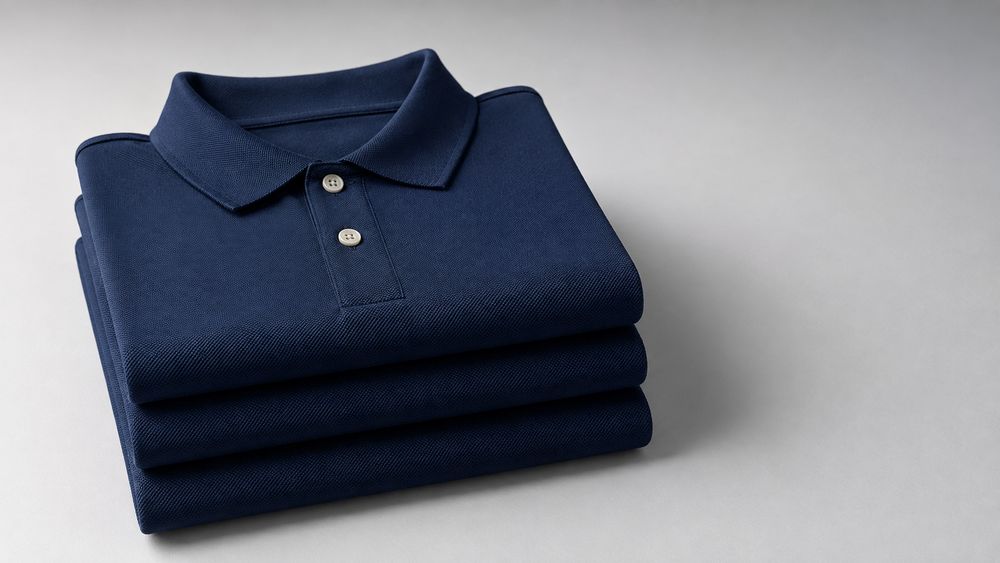
The question we are asked more than any other, and the one most companies get wrong in both directions.
Order too few and staff end up wearing the same shirt three days running, which defeats the point of having a uniform. Order too many and you have cartons sitting in a store room for two years while sizes change and people leave. Here is how we would work it out.
Start with the wash cycle, not the headcount
The real question is not how many people you have. It is how long a garment takes to go from a person's back, through a wash, and back onto a hanger ready to wear.
In Kerala's humidity that matters more than most people expect. A cotton-rich shirt washed in the evening may not be properly dry by the next morning during monsoon, and nobody irons a damp shirt well. That single fact is usually what decides between two sets and three.
The numbers we recommend
- Office staff, five-day week, laundered at home — 3 sets. One worn, one in the wash, one clean and ready. Two sets works only if the person is organised and the weather cooperates, and you cannot rely on either.
- Hospitality and food service, six-day week — 4 to 5 sets. These garments pick up stains and odours daily and often need a hot wash. Fewer than four and staff will run out mid-week.
- Housekeeping and industrial, daily wear — 4 sets minimum. Add more if the work is dirty enough that a garment occasionally cannot be salvaged.
- Healthcare, scrubs and tunics — 5 sets. Clinical settings usually mean a fresh garment every shift with no reuse, so the buffer has to be larger.
- Front desk and client-facing roles — 3 sets, better fabric. Here we would spend the budget on quality rather than quantity. A worn-out shirt on reception costs you more than a spare in the cupboard.
Add a buffer stock, and make it the right sizes
Beyond the per-person count, keep roughly 10 per cent of the total order as unallocated buffer. New joiners, a garment torn on a Tuesday, someone whose size changes — all of it gets handled without a new production run.
The mistake is buying that buffer in the sizes you ordered most of. Buffer stock should skew toward M and L for men and S and M for women, because those cover the widest range of new joiners at a pinch. Very large and very small sizes are better ordered as needed.
Three sets per office employee, four for daily wear, plus ten per cent buffer. That single rule covers most of what we quote.
Why our minimum makes this easier
Our minimum order is 10 pieces per style. That means a fifteen-person office does not have to guess and over-buy to hit a supplier's threshold — you order what you need now, and come back for the buffer or the new joiner's set later.
It also means you can trial before you commit. Order ten pieces of one fabric, put them on staff for a month, and see how they wash before you place the full order. We keep your pattern and size chart on file, so the second batch matches the first exactly.
The reorder question nobody asks early enough
Before you place a first order, ask your supplier what happens in eighteen months when you need twenty more. If the answer involves re-sampling, re-matching the shade and hoping, you will end up with two visibly different uniforms in the same room. Ask them to confirm they keep your pattern and colour reference. We do, and it is the main reason clients come back rather than start again.
If you are working through any of this for your own team, message us on WhatsApp or email knitwearcapital@gmail.com. Our minimum is 10 pieces, so there is no need to wait until you have a large order.