 Uniform manufacturer · Kerala
Dotknit, Honeycomb or Mesh: picking a jersey fabric for Kerala heat
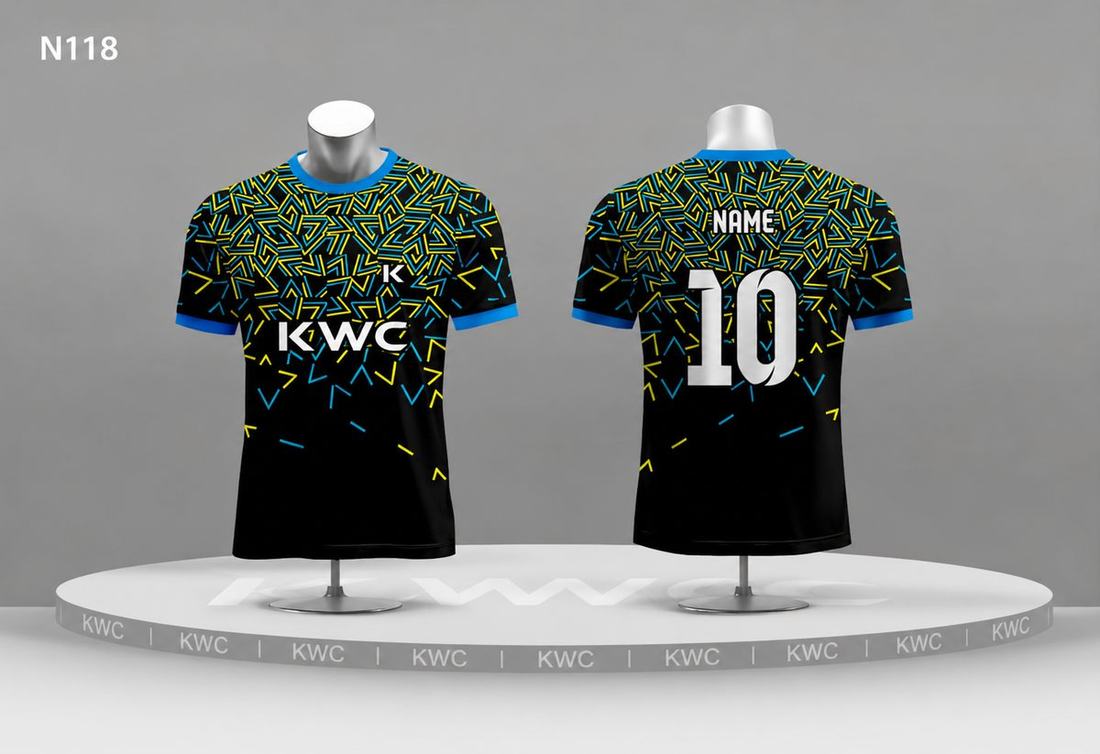
A jersey that works in a dry climate can be miserable in Kerala. Humidity, not just temperature, decides which knit you want.
All our jersey fabrics are polyester, because sublimation printing only bonds with polyester. Within that, the knit structure changes everything about how the garment handles sweat, air and light.
The knits we stock
- Dotknit — fine, even surface with a slight texture. The safest all-round choice and our most common recommendation for full sublimation, because the print lands crisp and the fabric moves well.
- Honeycomb — a raised cellular structure that lifts the fabric slightly off the skin. That air gap matters more than people expect once humidity climbs.
- Mesh (small hole) — the most open knit we carry. Maximum airflow, best in direct sun and long matches. Print detail is slightly softer because of the holes, so it suits bold designs more than fine ones.
- Saleena, PP and NJ — smooth lightweight polys, good for teams that want a soft handle and a clean print surface.
- Reebok Knit and Mars — firmer, more structured, hold their shape well across a season.
- Trendfit and Jacquard — textured premium options where the fabric itself should be visible in the finished kit.
What we would pick, by condition
Midday tournaments in open sun. Mesh or Honeycomb. The airflow is worth more than the marginal loss in print sharpness, and players will notice by the second half.
Humid, overcast, monsoon-season play. Dotknit or Honeycomb. In high humidity sweat cannot evaporate quickly no matter what you wear, so the priority becomes a fabric that does not cling and stays light when damp. A heavy smooth knit is the wrong answer here.
Indoor courts. Dotknit, or Sleeveless in Reebok Knit for basketball and volleyball. Less sun exposure means you can favour print quality and fit.
Shorts. Super Poly for general play, or 4-way Lycra where the sport demands real stretch — kabaddi, athletics, cycling.
The build matters as much as the fabric
Full sublimation prints the whole garment. Two-side sublimation covers front and back, front-and-sleeve covers those panels, and normal jersey uses solid fabric with printed or applied detail. Fewer printed panels usually means a lower price, so if budget is tight, changing the build is often a better saving than downgrading the fabric.
In Kerala humidity, airflow beats weight every time. A lighter fabric that traps air against the skin is worse than a slightly heavier one that lets it move.
Try before you commit
Ask us for a swatch pack. Feeling four knits side by side settles the argument faster than any description, and it costs you nothing. Once you choose, we stitch a full sample in your colours in about seven days, and bulk follows in around twenty-one.
Planning an order and want a second opinion before you commit? Message us on WhatsApp or email knitwearcapital@gmail.com. Our minimum is 10 pieces for uniforms and jerseys, so there is no need to wait until you have a large order.